Absorption Trench Failure in NSW: Signs, Causes by Soil Type, and What Can Actually Be Fixed
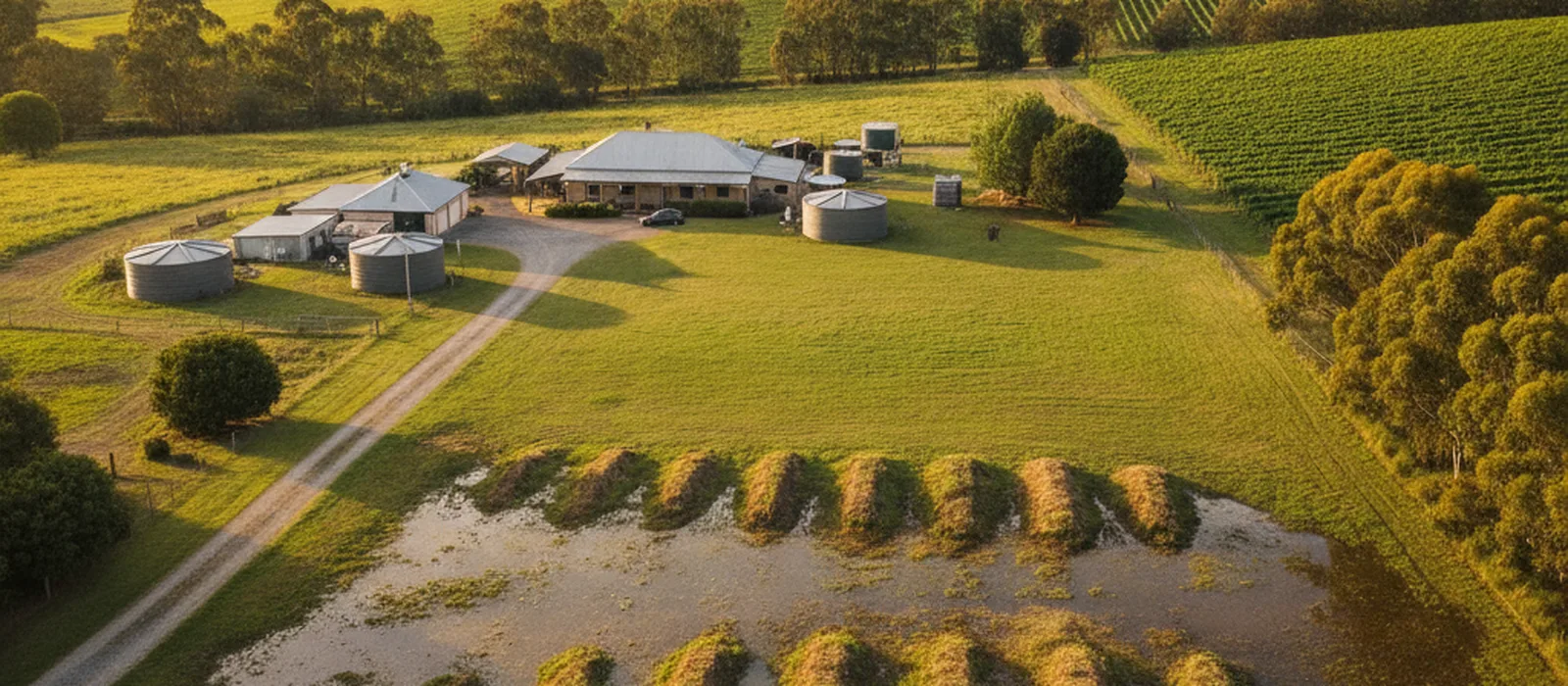
An absorption trench (the NSW term for what Americans call a drain field) is failing when effluent that should soak into the soil is instead pooling on the surface, backing up the line or keeping a strip of ground permanently wet. The signs are a boggy or bright green strip over the trench, smells in the yard, gurgling and slow drains that get worse after rain, and a septic tank whose liquid sits above the outlet. Most failures trace back to solids carried out of an over-full tank, which seal the trench base; some are hydraulic overload; a few are soil that should never have had a trench. Which one you have decides whether the trench can be rejuvenated ($1,500 to $4,500) or must be rebuilt by a licensed drainage contractor ($8,000 to $14,000).
The signs, and how to tell them from a full tank
| Sign | Trench failure | Full tank or blocked outlet |
|---|---|---|
| Wet, boggy or spongy ground along a strip of lawn, in dry weather | Yes: effluent surfacing | No |
| A strip of grass greener or taller than the rest | Yes: nutrients surfacing (common on sand) | No |
| Sewage smell in the yard, worst on warm evenings or after rain | Yes | Sometimes, at the lid or gully |
| Drains slow and gurgling only after rain, fine in dry weeks | Yes: saturated trench | No |
| Drains slow all the time, every fixture | Either | Yes |
| Liquid in the tank well above the outlet pipe | Yes: outlet cannot discharge | Also blocked outlet tee |
| Effluent at the end of the trench or in a downhill drain | Yes | No |
The tank check is the quickest tie-breaker. The Easy Septic Guide describes the healthy state: fluid no higher than the outlet pipe at the wall of the tank, with only floating scum above it. Liquid held well above the outlet means the trench (or the outlet tee) is not taking flow. A tank that is over-full of solids and a trench that is failing usually come together, because the first causes the second.
How trenches fail
The NSW Office of Local Government’s 2025 guidelines describe the mechanism plainly. Where effluent ponds in the base of a trench, conditions become anaerobic and a clogging layer develops. That layer, often called biomat, is a mat of bacteria and fine solids on the soil surface at the bottom and sides of the trench. A thin, aerobic layer is normal and does the treating; a thick anaerobic one seals the soil. Three things thicken it.
Solids carry-over. The single biggest cause. A tank past the one-third sludge mark, a collapsed outlet tee or a missing effluent filter sends suspended solids and grease into the trench, and the clogging layer grows fast. The OLG rule is to desludge once sludge and scum reach one-third of tank depth; NSW Health’s sizing method has a five-person tank reaching that in about four years. Every year past that point is trench life spent.
Hydraulic overload. More water than the soil can absorb: a household that has grown, a garbage grinder, a leaking cistern, or stormwater and roof runoff diverted onto the disposal area. The OLG guidelines note that gravity-fed trenches of large slotted pipe commonly result in uneven loading and in time suffer from creeping failure, with the first metres doing all the work; pressure-dosed systems spread the load and are preferred.
Physical damage and compaction. Vehicles, stock, sheds and paving over the trench compact the soil and crush the arch or aggregate. The OLG model approval conditions keep vehicles and stock off the effluent application area and prohibit buildings, driveways, concrete, tennis courts, pools, garden beds, vegetable gardens and large trees on it. Everhard’s installation notes for its arched trench liner say the same in three words: do not compact.
Why Hunter soils fail differently
Trench design in NSW works from soil category: AS/NZS 1547:2012 grades soils from Category 1 (gravels and sands) to Category 6 (medium to heavy clays), and the OLG guidelines give trench loading rates for Categories 1 to 5 only. For Category 6, the design will need to rely on more processes than just absorption by the soil; dispersive (sodic) or shrink-swell clays are treated as Category 6 regardless of texture. That single table explains most of the failures we see.
Coalfields clay (Cessnock, Kurri Kurri, Pokolbin, Greta). Heavy clay with weak structure is the high-risk soil class in every Hunter council’s risk table. Water cannot get away, the trench base ponds after the February rains (Cessnock Airport averages 743 mm a year, most of it in late summer), and the clogging layer forms in saturated conditions. Trenches here have little margin; the OLG says Category 6 soils suit evapotranspiration systems only with secondary treated effluent, and drip irrigation of secondary effluent is the preferred method. Rejuvenation can work if the failure is a solids problem; a trench that was always undersized for the clay will fail again.
Floodplain alluvium (Maitland, Morpeth, Hinton, Raymond Terrace flats). Alluvial clays plus a water table that rises with the river. The OLG risk table treats groundwater within 0.6 m of the surface as a high-risk trigger, and wants effluent application areas above the 1-in-20-year flood level and pressure dosed rather than gravity fed. A trench under floodwater fills with silt; after a flood, NSW Health’s advice is not to use the system until the water has dropped below the disposal area and the whole system has been inspected.
Coastal sand (Medowie, Salt Ash, Williamtown, Bobs Farm, Tomago). The opposite problem. Sand is Category 1 and drains almost too well; Hunter Water’s catchment guidelines note that contamination moves through sand to the groundwater quickly. Sand trenches rarely pond, but they can still clog with grease and solids, and the green strip is the giveaway. Because the sand catchments are drinking-water special areas, the fix is often secondary treatment rather than a bigger trench.
Upper Hunter black soils (Singleton, Muswellbrook). Cracking clays that shrink in drought and swell in a wet year, and hot summers that favour evapotranspiration beds over plain trenches. Muswellbrook Shire Council puts the working life of trenches and beds at 15 to 25 years and requires council approval to replace any part of a disposal area because of failure.
Dungog’s hills. Residual soils over bedrock with shallow, seasonal perched water tables, on slopes that the OLG rates as difficult above 20 per cent. Trench failure here often looks like a spring appearing downhill of the disposal area.
What can be fixed, and by whom
Fix the cause first. A pump-out and a look at the outlet tee and filter costs a fraction of any trench work, and if solids carry-over was the cause, nothing else lasts without it. Effluent filters are recommended by the OLG guidelines and can be retrofitted to existing tanks.
Rest and rejuvenate an existing trench. Where the trench is clogged but intact, high-pressure jetting to clear the distribution lines and clogging layer, and giving the trench a dry period to recover its aerobic condition, can restore drainage. That work on an existing trench is ours: absorption trench rejuvenation and jetting is $1,500 to $4,500. Properties with a dual disposal area should already be swapping between the two; the Easy Septic Guide says to swap every 12 months or so, which is the simplest rejuvenation there is. Whether jetting will hold depends on why the trench clogged, which is what our trench diagnostics visit is for.
Rebuild or extend. A collapsed arch, a crushed pipe, a trench that is simply too short for the load, or Category 6 clay that never suited a trench needs new construction: a longer or pressure-dosed trench, an evapotranspiration bed, a mound, or a change to secondary treatment with subsurface drip. All of that is plumbing and drainage work in NSW and is carried out by licensed plumbing and drainage contractors we work with; their NSW licence number appears on every quote. A new absorption trench is $8,000 to $14,000. It also needs council approval: replacing or relocating a disposal area is an alteration to the approved system under section 68 of the Local Government Act, with a site and soil assessment, and Cessnock, Muswellbrook and the other Hunter councils all say so on their pages. Our replacement planning service handles the assessment, sizing and paperwork.
Divert the stormwater. Cheap, often overlooked: the OLG model conditions require stormwater to be diverted away from the disposal area. A downpipe or a driveway draining onto the trench can be the whole problem.
What does not work
- Chemicals or “trench cleaners” poured down the drain. They kill the tank bacteria and reach the trench diluted. The Easy Septic Guide: no amount of additives will help a septic system if it needs to be pumped out or if the trench is failing.
- Pumping the tank more often without fixing the trench. It relieves symptoms for a few weeks. The trench is still sealed.
- Driving over it or building over it to “compact and dry” the ground. That is how it got worse.
- Planting large trees to “drink it up”. Roots find the aggregate and the pipes. Keep large trees off the area; grass and shallow-rooted shrubs are the OLG’s preference for an application area.
How long should a trench last?
Muswellbrook Shire Council’s fact sheet gives 15 to 25 years for disposal trenches and beds. The OLG guidelines add a point worth knowing for buyers of older Hunter properties: existing systems are not required to meet current design standards unless there is a failure, an alteration to the associated buildings or an alteration to the system. An old trench is not illegal because it is old; it becomes a council matter when it fails.
Frequently Asked Questions
Is it the tank or the trench?
Check the liquid level in the tank from above (never lean in). Liquid held well above the outlet pipe means the trench or the outlet tee is not accepting flow. Drains that are slow only after rain point to a saturated trench; drains slow all the time point to the tank. A pump-out with a look at the tee usually settles it.
Will pumping the tank more often fix a failing trench?
It relieves the backup for a while and it stops making the trench worse, so it is the first step, not the last. A trench whose base has sealed needs jetting and rest, or rebuilding.
Can I rejuvenate the trench myself?
No. Opening the tank is confined-space territory, and jetting needs the equipment and the diagnosis. What you can do is stop stormwater reaching the area, keep vehicles and stock off it, swap to the second disposal area if you have one, and get the tank pumped.
Does council need to approve a new trench?
Yes. Replacing or relocating a disposal area is an alteration under section 68 of the Local Government Act, needing a site and soil assessment and, in most Hunter councils, an application through the NSW Planning Portal. Like-for-like repair of a short section of line is generally allowed without approval (Cessnock and Muswellbrook both say so), but a rebuild is not.
How long do trenches last in Hunter clay?
Muswellbrook Shire puts trenches and beds at 15 to 25 years. On Category 6 clay with a tank that has been pumped on time, the upper end is realistic; with a decade of solids carry-over, far less. The soil does not wear out; it seals.
Can I put a shed or driveway over the trench?
No. The OLG model approval conditions prohibit buildings, driveways, concrete, pools, garden beds, vegetable gardens and large trees on the effluent application area, and require vehicles and stock to be kept off it. Compaction and crushed pipes are among the commonest causes of failure we see.
Sources and further reading
- NSW Office of Local Government, Onsite Wastewater Management Guidelines (April 2025): soil categories and loading rates (Table 6-4), trench construction and clogging (section 5.7), flood positioning, model approval conditions.
- NSW Office of Local Government, The Easy Septic Guide: warning signs, the liquid-level check, dual disposal areas, additives.
- Muswellbrook Shire Council, Installing or altering an on-site sewage management system: trench lifespan and when replacement needs approval.
- Cessnock City Council, Unauthorised installation, alteration or operation: what counts as a repair versus an alteration.
- NSW Health, Flooding and on-site wastewater systems: post-flood advice for tanks and disposal areas.
- Local Government Act 1993 (NSW), section 68: the approval to install, construct or alter a sewage management facility.
Request Received!
Thank you for reaching out. Our Hunter Valley dispatch team will call you back promptly to confirm details and provide an upfront quote.
Call us directly on 0468 278 123